
Asian Institute of Technology Bangkok brought us together when we did our Masters Degrees during 1986-87. Since then, we have been scattered across the world. This is Part 3 of our reunion trip in Jan 2026, in Sri Lanka and covers our journey from Wilpattu National Park to Dambulla through Anuradhapura.
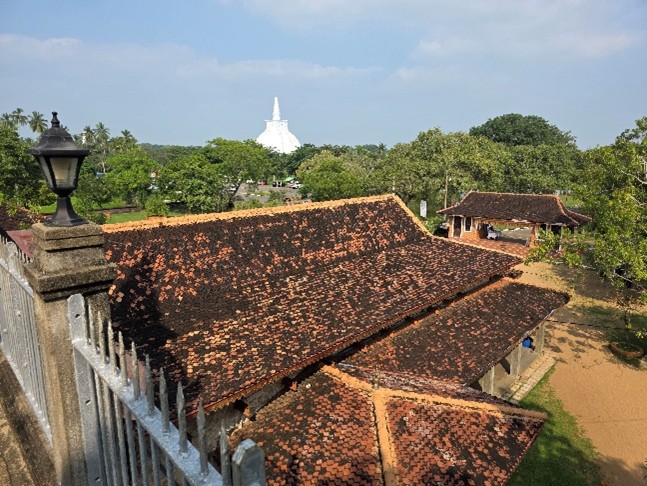
We left Wilpattu in the morning after breakfast and made our way to Anuradhapura. We had read about the various stupas there. The idea was to swing by Anuradhapura, have lunch somewhere there and then make our way to Dambulla by evening or nightfall.
Anuradhapura & Dambulla
Online we looked up good restaurants in Anuradhapura, and there was a restaurant called “Little Paradise” with good ratings. We made our way through very narrow streets, and it led us into a large square surrounded by quite nice bungalows and Little Paradise was a bungalow converted into a restaurant and guest house. We turned up unexpectedly and the manager/chef took his time but cooked one of the most delicious meals we had on the trip. We didn’t mind the wait, holding on to our beer bottles and taking in the serene garden around the house/bungalow. There were a couple of guests staying there and it seemed like a nice central and quiet place to stay at Anuradhapura.
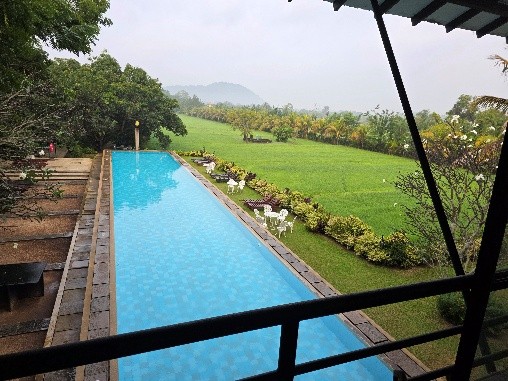
We finally reached Dambulla and checked into a very grand hotel “Sigiriya Resort”. We had planned to stay only 1 night in Dambulla and then we had 4 nights in Kandy. Seeing the nice hotel, its grand grounds, lovely swimming pool, we were tempted to stay 1 more night here and reduce to Kandy to 3 nights. But we could not change the reservations and rooms were not available.

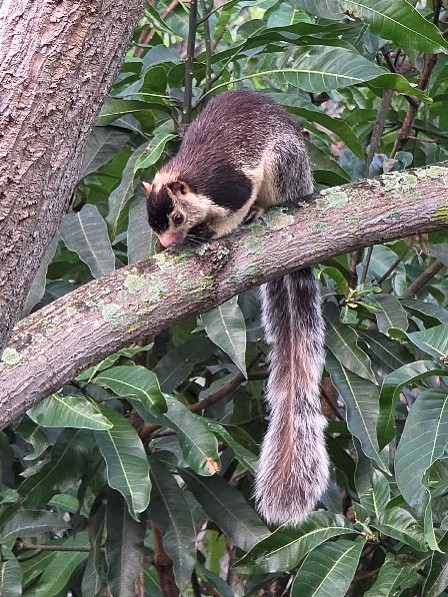
The hotel was fabulous. Huge grounds, good food and some good music. We had this flying squirrel pay us a visit whilst at breakfast.
Dambulla had 2 main attractions: The Cave temple of Dambulla and the Sigiriya rock which we had planned to climb. We decided the next day to leave a little late from the hotel (enjoy the comforts) and then reach the Cave temples by noon. After that have lunch somewhere near Sigiriya and then climb the Sigiriya rock closer to evening so the sun won’t be too harsh.
Dambulla Cave Temple
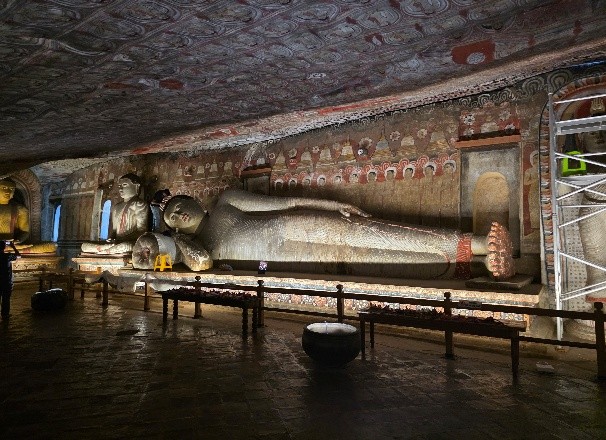
Dambulla cave temple (Sinhala: දඹුල්ල රජ මහා විහාරය, romanized: Dam̆būlla Raja Maha Vihāraya; Tamil: தம்புள்ளை பொற்கோவில், also known as the Golden Temple of Dambulla, is a World Heritage Site (1991) in Sri Lanka, situated in the central part of the country. This site is situated 43 kilometres (27 mi) north of Matale.
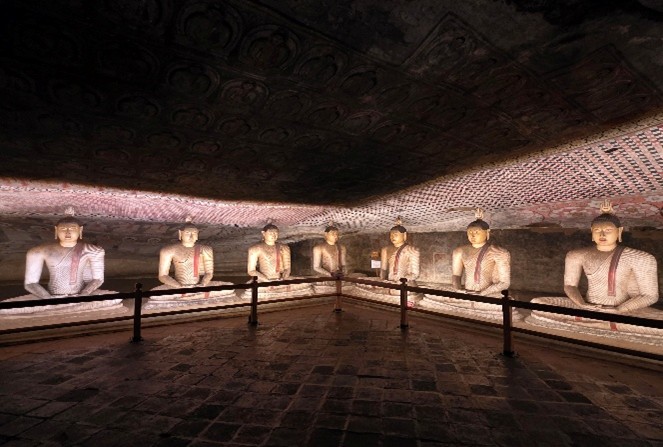
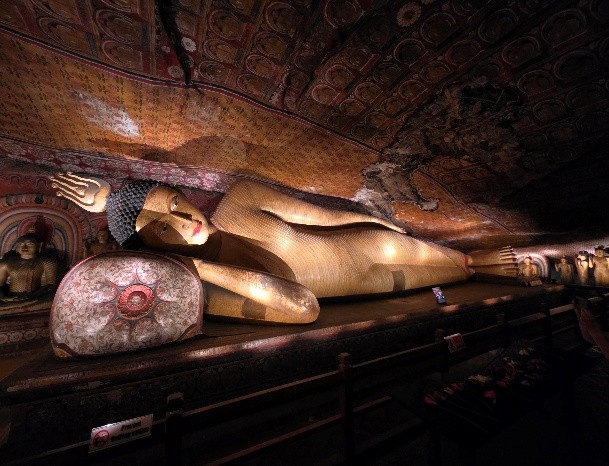
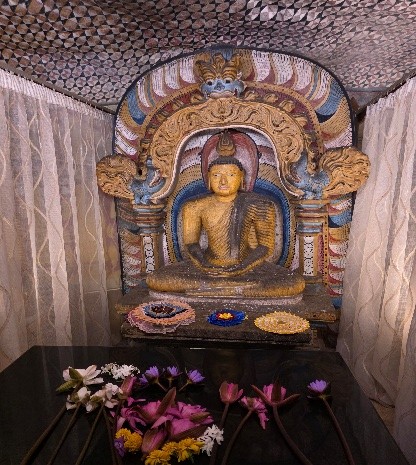
Dambulla is the largest and best-preserved cave temple complex in Sri Lanka. The rock towers 160 m (520 ft) over the surrounding plains. There are more than eighty documented caves in the surrounding area. Major attractions are spread over five caves, which contain statues and paintings. These paintings and statues are related to Gautama Buddha and his life. There are a total of 153 Buddha statues, three statues of Sri Lankan kings and four statues of gods and goddesses. The latter include Vishnu and the Ganesha. The murals cover an area of 2,100 square metres (23,000 sq ft). Depictions on the walls of the caves include the temptation by the demon Mara, and Buddha’s first sermon.
This temple complex dates back to the first century BCE.[2] It has five caves under a vast overhanging rock, carved with a drip line to keep the interiors dry. In 1938 the architecture was embellished with arched colonnades and gabled entrances. Inside the caves, the ceilings are painted with intricate patterns of religious images following the contours of the rock. There are images of the Lord Buddha and bodhisattvas, as well as various gods and goddesses.
The Dambulla cave monastery is still functional and remains the best-preserved ancient edifice in Sri Lanka. This complex dates from the third and second centuries BC, when it was already established as one of the largest and most important monasteries. The temple is composed of five caves of varying sizes and magnificence. The caves, built at the base of a 150m high rock during the Anuradhapura (1st century BC to 993 and Polonnaruwa times (1073 to 1250), are by far the most impressive of the many cave temples found in Sri Lanka.
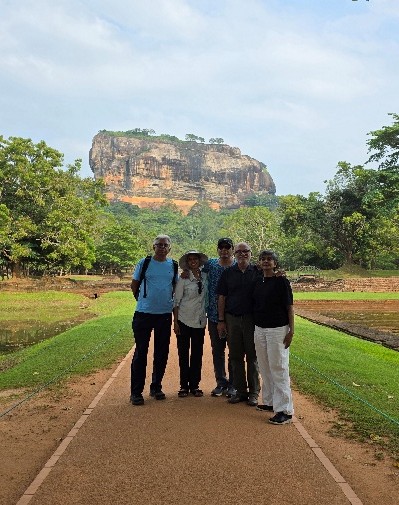
Sigiriya – Lion Rock

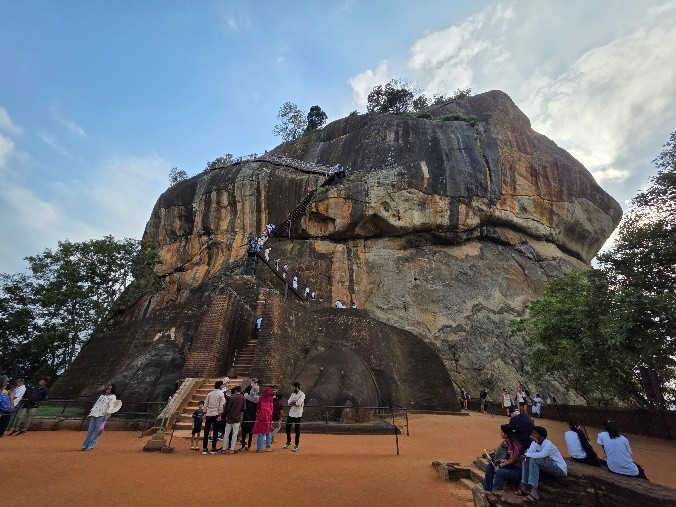
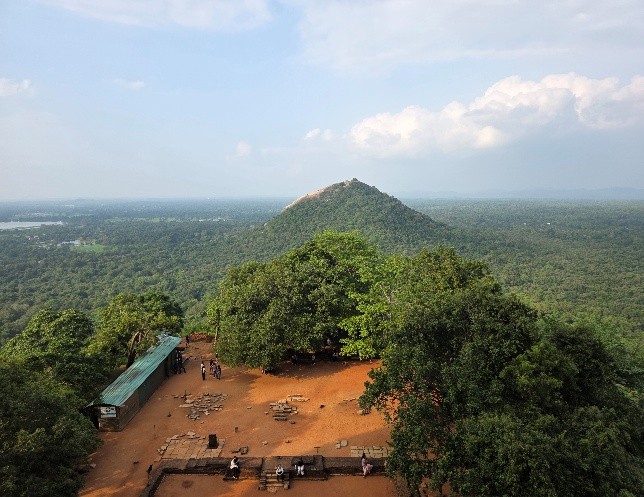
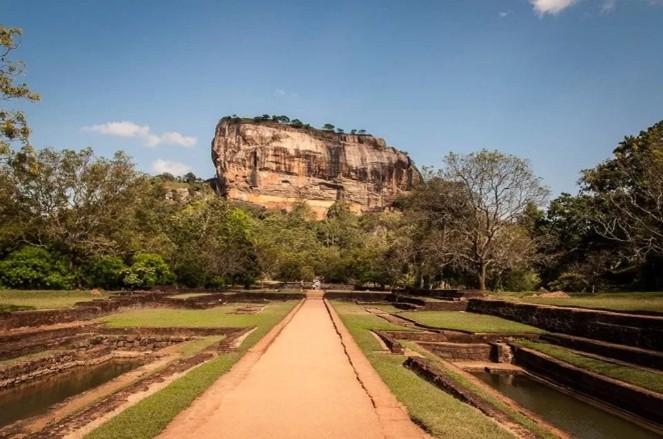
According to the ancient Sri Lankan chronicle the Cūḷavaṃsa, this area was a large forest, then after storms and landslides it became a hill and was selected by King Kashyapa (CE 477–495) for his new capital. He built his palace on top of this rock and decorated its sides with colourful frescoes. On a small plateau about halfway up the side of this rock he built a gateway in the form of an enormous lion. The name of this place is derived from this structure; Sinhagiri, the Lion Rock.
The capital and the royal palace were abandoned after the king’s death. It was used as a Buddhist monastery until the 14th century. Sigiriya today is a UNESCO listed World Heritage Site. It is one of the best-preserved examples of ancient urban planning.
The 5th-century frescoes on the way up/down Sigiriya Rock are known as the Sigiriya Damsels or Apsaras (celestial nymphs). Painted on a sheer rock face, these vibrant, waist-up figures depict women with flowers, possibly representing consorts of King Kasyapa or divine figures, and are located near a spiral staircase.
How and why was Sigiriya Lion Rock abandoned?
Kashyapa’s reign was short-lived, as he was defeated and killed by his brother Moggallana in 495 CE, after a bloody battle at the foot of Sigiriya Lion Rock. Moggallana restored the original capital at Anuradhapura, and Sigiriya Lion Rock was abandoned and neglected for centuries. It was later occupied by Buddhist monks, who used it as a monastery and a pilgrimage site. They also added their own inscriptions and paintings to the mirror wall, which became a repository of ancient graffiti.
Sigiriya Lion Rock was rediscovered by British archaeologists in the 19th century, who were amazed by its beauty and mystery. They began to excavate and restore the site and revealed its hidden treasures and secrets. Sigiriya Lion Rock was declared a UNESCO World Heritage Site in 1982 and is now one of the most popular tourist attractions in Sri Lanka. It is also a source of pride and inspiration for the Sri Lankan people, who regard it as a symbol of their ancient civilization and heritage.
What are the main features of Sigiriya Lion Rock?
Sigiriya Lion Rock is a masterpiece of ancient engineering and art, that showcases the skill and creativity of its builders and designers. It is divided into several areas and levels, each with its own function and style.
The main features of Sigiriya Lion Rock are:
The water gardens: The water gardens are located at the base of the rock, and are composed of pools, fountains, ponds, and canals. They are fed by an ingenious hydraulic system, that uses underground pipes and gravity to supply water from a nearby reservoir.
The water gardens are designed to create a pleasant and refreshing environment, and to reflect the beauty of the rock and the sky. They are also symbolic of the cosmic ocean, that surrounds Mount Meru in Hindu mythology.
The lion gate: The lion gate is the entrance to the summit complex and is the most iconic feature of Sigiriya Lion Rock. It is shaped like a huge lion, with its paws and claws carved out of the rock, and its head and body made of brick and plaster
The lion gate is a symbol of the power and majesty of King Kashyapa, and his connection to the lion cult. It is also a representation of the guardian of the rock, who protects it from evil and intruders. Visitors must climb a steep staircase that passes through the lion’s mouth, to reach the top of the rock